
Structural Assessment
Inspection and assessment of old buildings or structures follow engineering principles and a standard process to ensure safety and extend service life. The work is generally divided into 4 main steps:
1. Preliminary Inspection
(Visual Inspection)
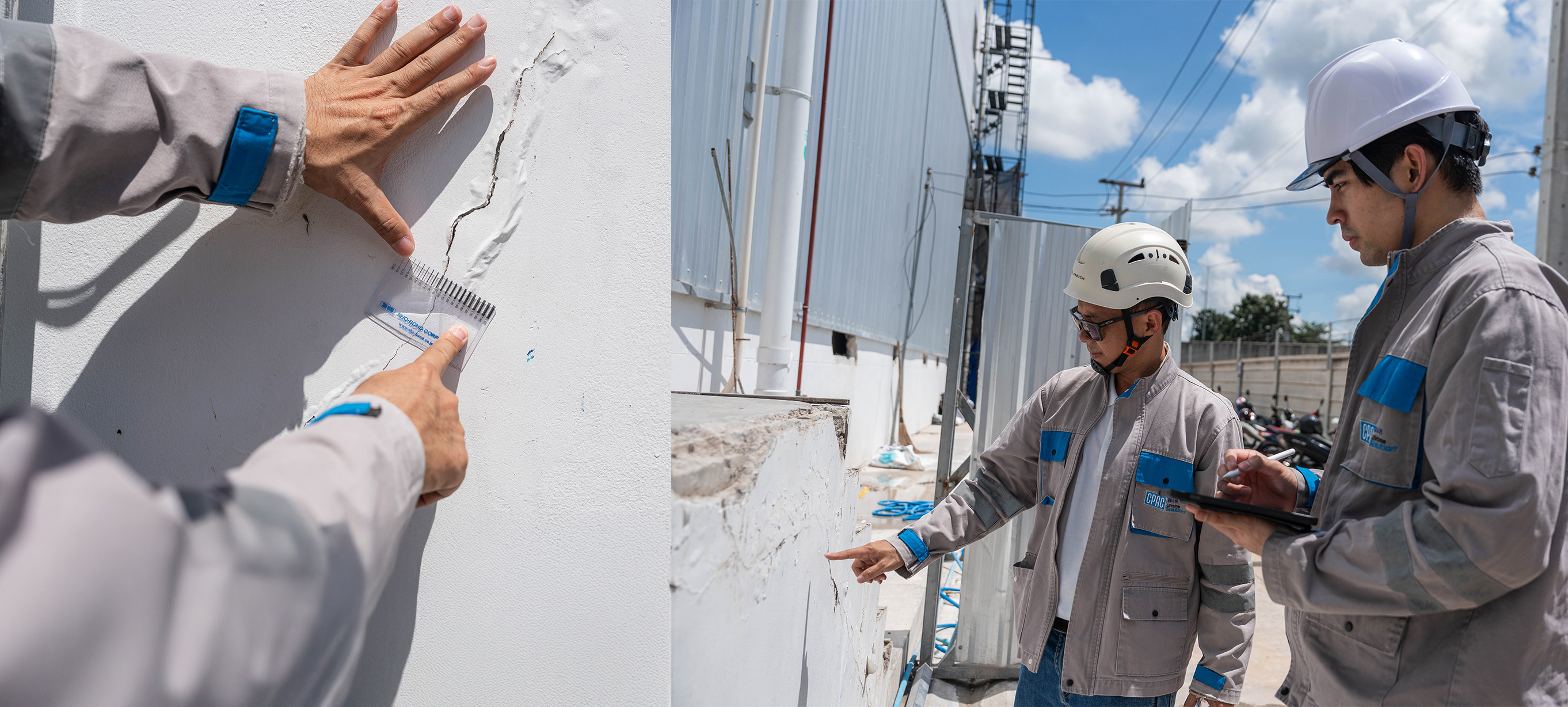
The first step is a walk-through visual survey with basic inspection tools to assess the general condition of the building or structure.
- Crack survey: classifying cracks, such as thermal cracks, structural cracks caused by overloading, or cracks caused by differential settlement.
- Concrete surface failure: checking for spalling that exposes the reinforcing steel.
- Alignment & Plumb check: checking whether columns or beams show deflection, or whether the building is tilting.
- Environmental assessment: checking moisture, standing water or chemicals that may corrode the structure.

2. In-depth Inspection
(Non-Destructive Testing - NDT)
Special testing equipment is used without damaging the structure, to evaluate concrete strength and inspect the internal condition of the structure.
- Rebound Hammer Test (Schmidt Hammer)
An impact hammer is used to estimate the compressive strength of the concrete. - Ferroscan
Electromagnetic scanning to locate the reinforcing steel and measure its size and concrete cover (Covering) without drilling or chipping the concrete. - Ultrasonic Pulse Velocity (UPV)
High-frequency sound waves are passed through the concrete to check its density and find voids or internal cracks.

3. Partially Destructive Testing
(Partially Destructive Testing)
Where high accuracy is needed for detailed engineering calculations, samples must be taken from the actual structure.
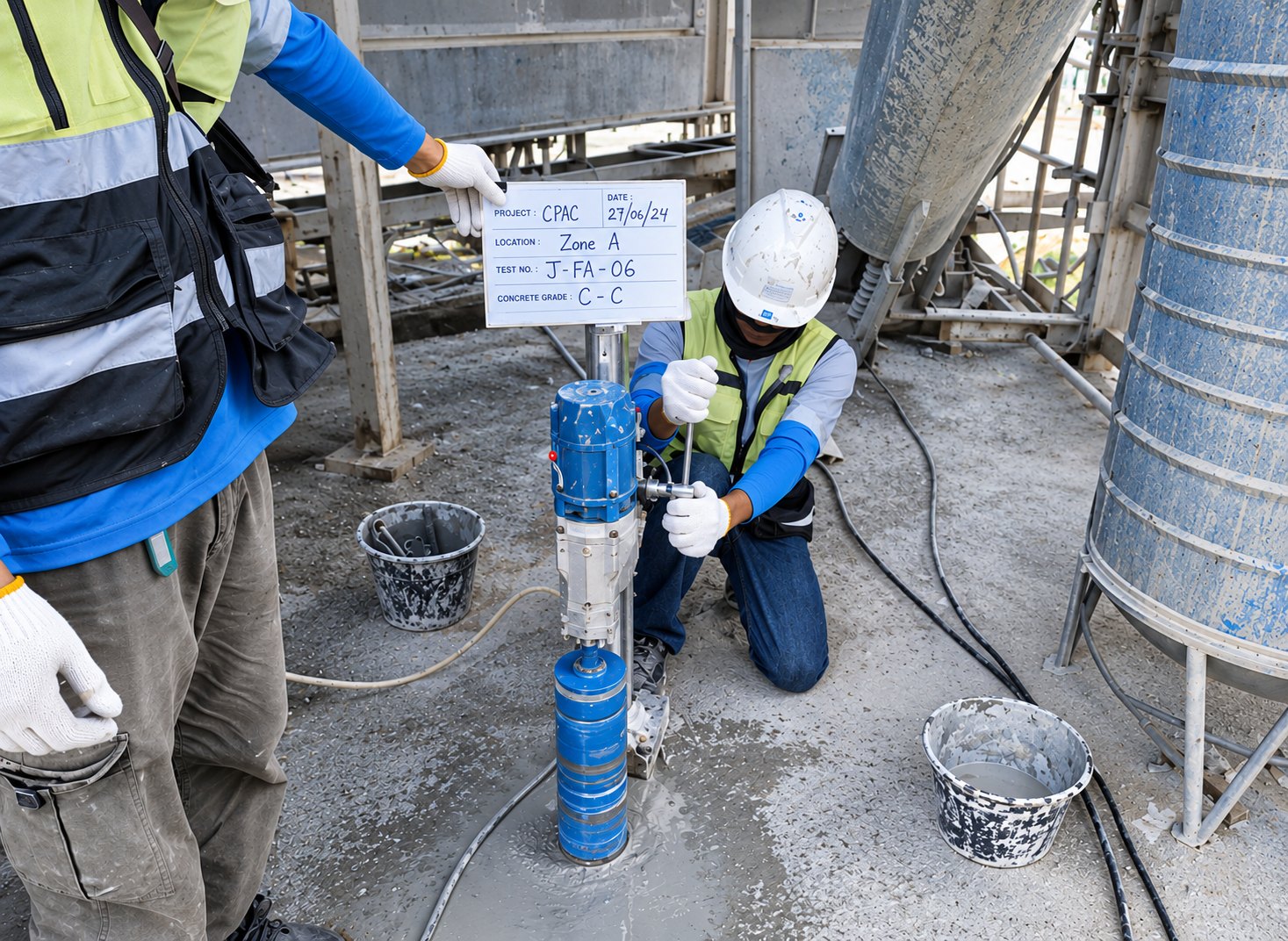
- Concrete Core Drilling
Concrete cores are cut from the structure and tested in a compression machine in the laboratory (Lab) to find the true compressive strength of the concrete. - Carbonation Test
Testing the pH of the concrete to assess the loss of alkalinity and analyse the risk of corrosion of the reinforcing steel. - Chloride Content Test
Concrete powder is extracted and tested for chloride content — the main cause of rusting reinforcement, which expands and cracks the concrete.
4. Engineering Analysis and Evaluation
(Engineering Analysis & Assessment)
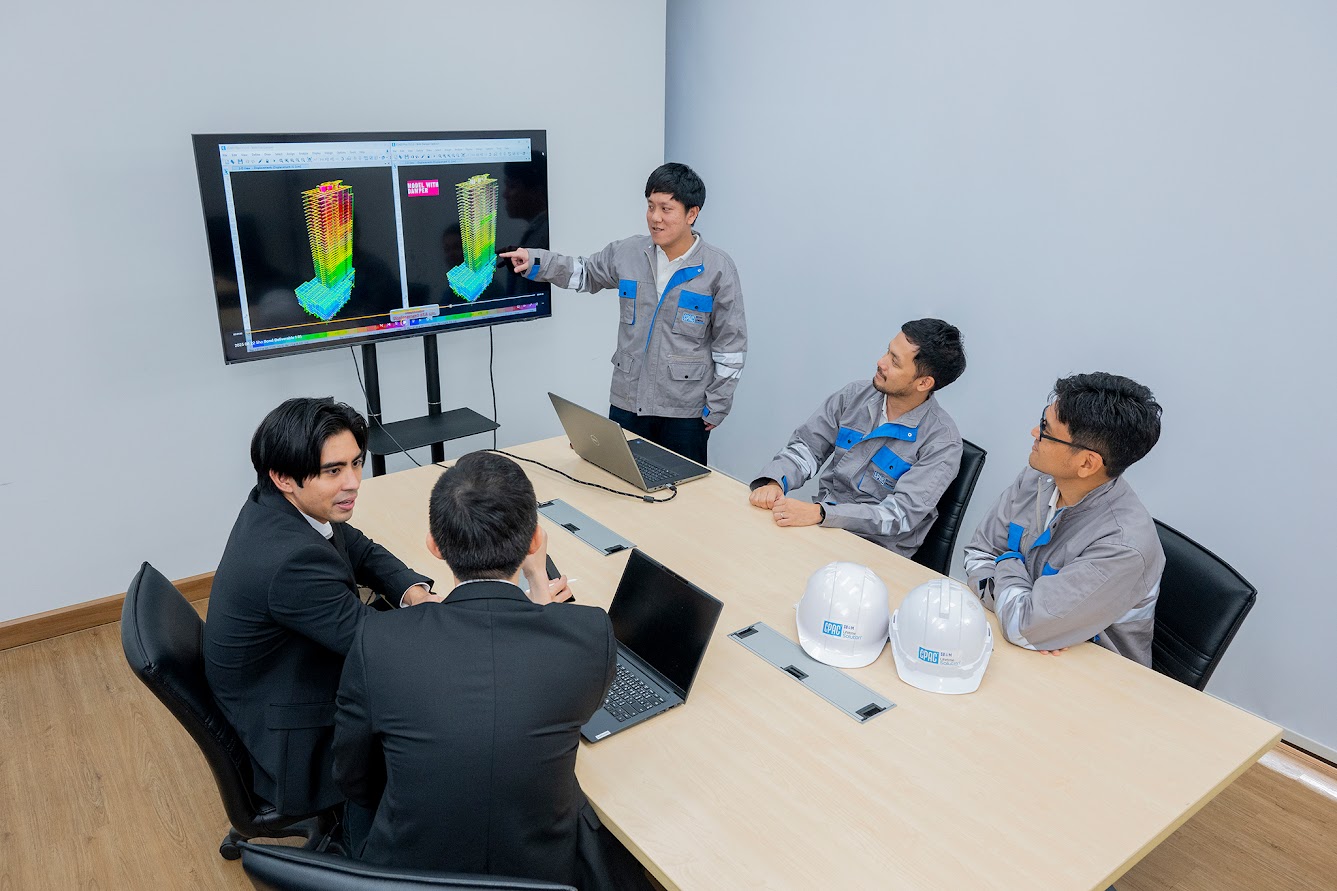
Once all the raw data and test results are available, structural engineers use them to evaluate the building as a whole.
- As-Built Drawing
Preparing drawings of the structure as it currently stands, for old buildings whose original drawings no longer exist. - Structural Software Modeling
The measured material strengths are entered into structural analysis software to check whether the building can still carry its loads (Load Carrying Capacity) to current standards. - Summary and Recommendations (Reporting)
A report summarising the building's condition, classifying the level of damage and the corrective approach, for example:- Normal / general maintenance level
Paint to seal fine (map) cracks - Structural repair level (Repair)
Chip out the concrete, apply rust inhibitor, then patch with Non-shrink Grout - Strengthening level (Retrofitting/Strengthening)
e.g. Carbon Fiber (CFRP) wrapping, column section enlargement (Section Enlargement) or steel jacketing (Steel Jacketing)
- Normal / general maintenance level